Under the theme “Before the Vast Sea,” the 24th Vietnam Poetry Day took place on March 3 at the Quang Ninh Exhibition of Planning and Expo Center...
Under the theme “Before the Vast Sea,” the 24th Vietnam Poetry Day took place on March 3 at the Quang Ninh Exhibition of Planning and Expo Center, drawing a large and diverse audience, including members of the armed forces, coal miners, students, and poetry lovers.
Nguyen Quang Thieu, President of the Vietnam Writers’ Association, said Quang Ninh was a natural choice for hosting this year’s event. Known for its majestic landscapes, proud history, and enduring cultural traditions, the province also holds a special place in the history of Vietnam Poetry Day.
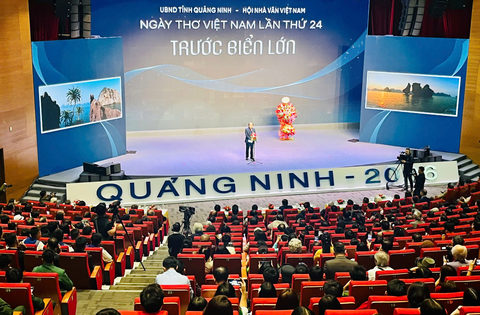
Poet Nguyen Quang Thieu delivers the opening speech, followed by Deputy Prime Minister Le Thanh Long beating the ceremonial drum to officially open the 24th Vietnam Poetry Day under the theme “Before the Vast Sea.”
The symbolic Bai Tho (Poem) Mountain stands as a reminder of the deep connection between the land and the nation’s poetic heritage. Poetry and culture are like sails catching the winds of the time, strengthening the ship named Vietnam as it heads toward the open sea.
Quan Minh Cuong, Secretary of the Quang Ninh Provincial Party Committee, expressed the province’s honor in hosting the event, describing it as a meaningful cultural occasion that reflects Vietnam’s aspirations for creativity, integration, and cultural confidence in a new era.
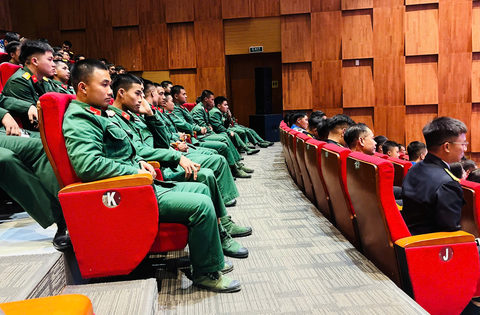
Soldiers of the Quang Ninh provincial armed forces attend the poetry night “Before the Vast Sea.”
The poetry night featured works about the sea by renowned poets such as Nguyen Khoa Diem, Huu Thinh, Tran Nhuan Minh, and Tran Dang Khoa, alongside younger voices.
Through their verses, audiences were invited to reflect on the sea as a symbol of memory, resilience, and national aspiration.
The event also introduced a poetry collection titled Before the Vast Sea, gathering works from multiple generations of poets and presenting a poetic portrait of Vietnam’s maritime spirit and cultural identity.
Translated by DO HUONG