Military Literature Magazine has concluded its literary writing camp themed “Revolutionary War and Today’s Soldiers,” held from May 21 to 30.
Military Literature Magazine has concluded its literary writing camp themed “Revolutionary War and Today’s Soldiers,” held from May 21 to 30.
The event brought together 30 writers and poets from both military and civilian backgrounds across the country.
During the 10-day camp, participants visited military units, engaged in professional exchanges, and worked on literary pieces inspired by revolutionary war, the armed forces, and the image of Vietnamese soldiers in contemporary life.
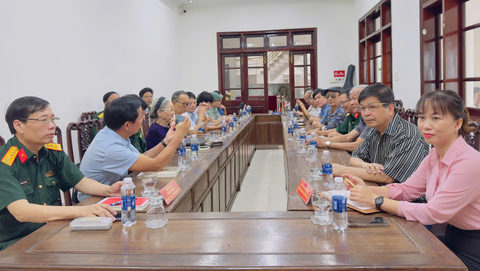
Camp participants and guest writers attend the closing ceremony.
Speaking at the closing ceremony, Colonel and writer Phung Van Khai, Deputy Editor-in-Chief of Military Literature Magazine, emphasized that the magazine’s 70-year journey has always been closely connected with its contributors nationwide.
He noted that the publication draws its vitality from the lives of ordinary people, the sacrifices and responsibilities of soldiers, and the dedication of generations of writers.
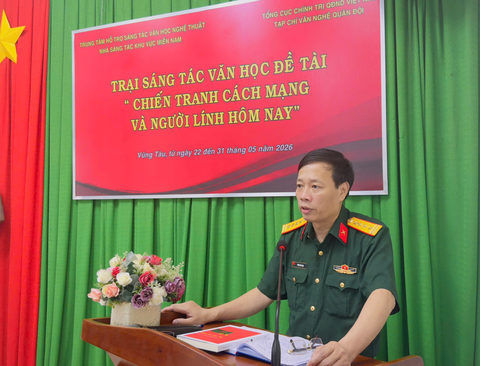
Colonel and writer Phung Van Khai, Deputy Editor-in-Chief of Military Literature Magazine, speaks at the ceremony.
According to a summary report presented by writer Dinh Phuong, participants produced nearly 30 poems by eight poets, nine literary reportage pieces, and one short story by six prose writers.
Many of these works emerged directly from field experiences and personal encounters with military life, resulting in authentic and emotionally rich portrayals of today’s soldiers.
Several writers completed or substantially developed works inspired by their visits to military units, highlighting military traditions, professional responsibilities, and the contributions of servicemen and servicewomen in peacetime.
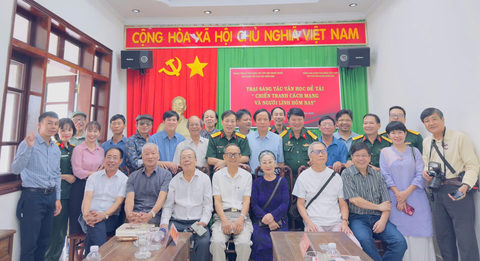
Writers and poets pose for a commemorative photo.
Poets explored a wide range of themes, including wartime memories, comradeship, family, love, and the quiet sacrifices made by soldiers today.
Although the camp has ended, organizers believe the new works will open fresh perspectives on military life and contribute promising entries to the magazine’s 2026 Poetry and Literary Sketch Contest.
Translated by DO HUONG